Employee Spotlight: Dakota Schrantz

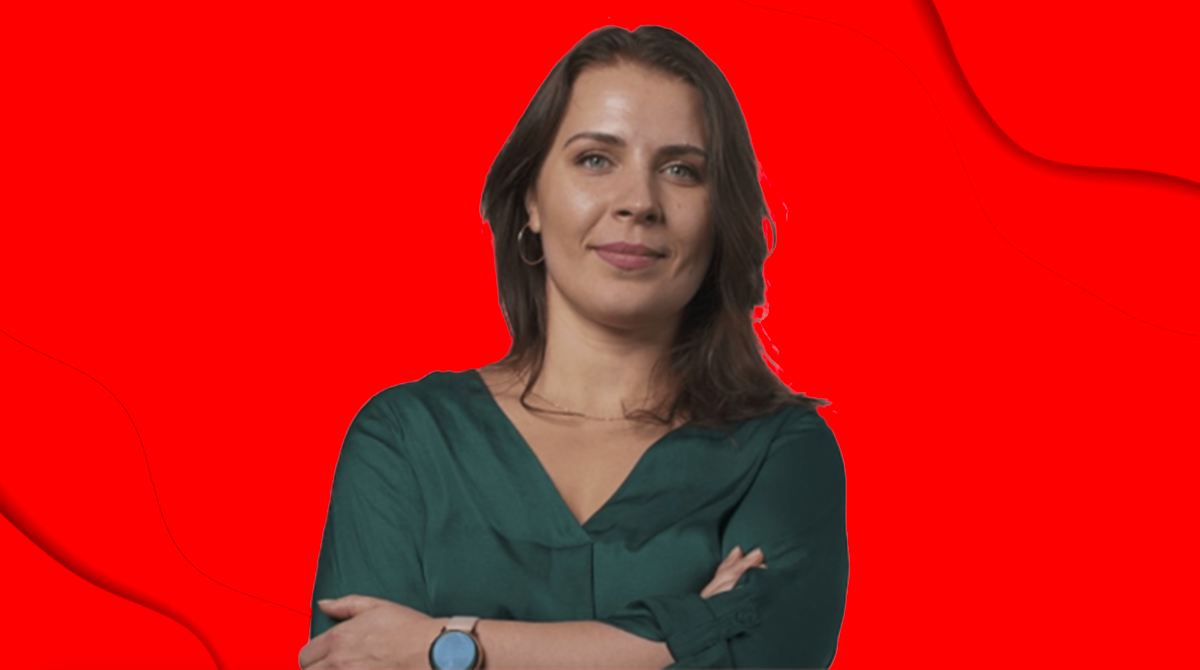
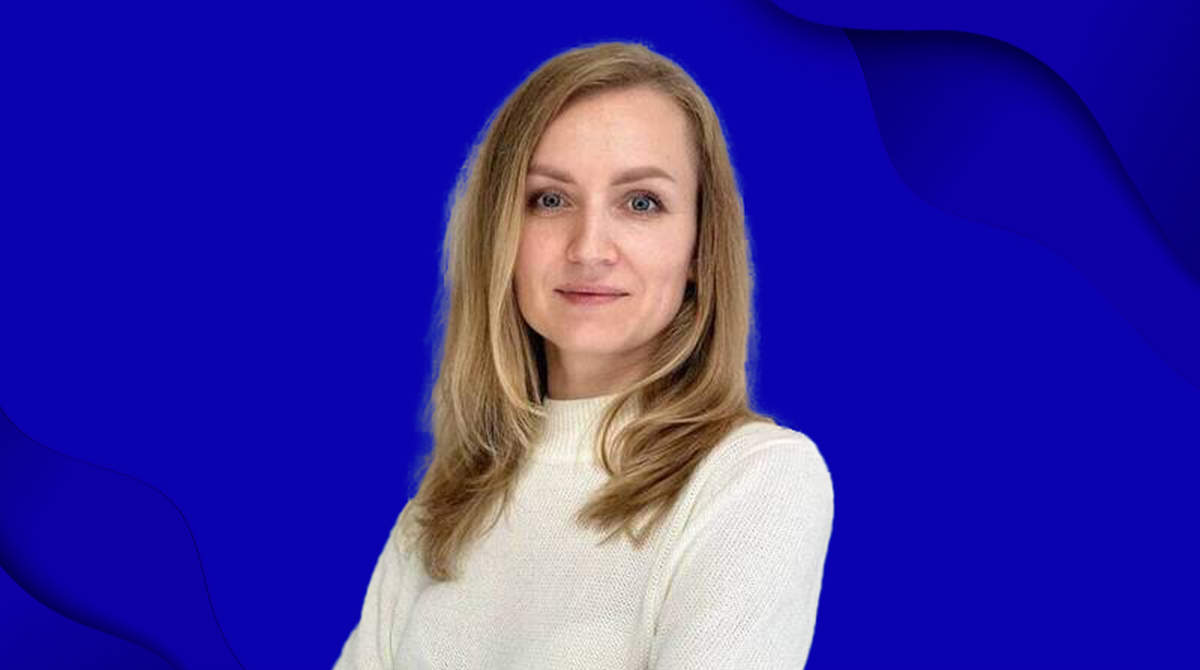
Meet Dakota Schrantz, Product Marketing Manager at LoopMe — Dakota talks about confidence, time blocking, and why she fell in love with Scotland.


What project or event has been your favorite at LoopMe?
Joining the Chartboost team has been a highlight for me. It’s been exciting to dive into the supply-side world, learn more about the company’s newest ventures, and take on new challenges. I’ve especially loved working alongside such a knowledgeable and collaborative group of people who continually push me to grow while supporting me along the way. I know we’ll continue to do great things together!

Can you discuss a skill you’ve acquired or developed while working at LoopMe?
I’d say confidence has been one of the biggest things I’ve developed during my time at LoopMe. I’ve learned to trust my instincts, speak up with ideas, and take initiative, even when something is outside my comfort zone. Working in such a fast-paced environment has also taught me to be flexible and adapt as things evolve. Most importantly, I’ve learned that I don’t need to have all the answers right away. Sometimes it’s about asking the right questions, trusting yourself, and figuring things out as you go. 

Do you have any WFH routines or rituals?
Time blocking has become my ultimate ritual. It’s easy to get wrapped up in a project and lose track of time, so I’ve found that having a structured mental workflow goes a long way. I try to organize my day around different priorities while making sure to carve out time for lunch and getting fresh air with my dogs. It helps me stay productive without burning myself out, and those little breaks make it easier to come back feeling recharged and ready to tackle the next thing.

Tell us a bit about yourself.
I’ve been at LoopMe for a little over three years and in digital marketing overall for thirteen. I’m based in Philadelphia, where my daily coworkers are my two dogs, Penny and Stan, and the newest member of the team, my kitten Phoebe. Outside of work, I love getting lost in a good story, whether it’s through a book, TV show, or movie. I’m a homebody by nature, but a concert with one of my favorite bands or an Eagles home game will always get me out of the house. 

If you could live anywhere in the world, where would you choose and why?
Scotland! I visited for the first time this summer and fell in love. Between the beautiful landscapes, cobblestone streets, friendly people, and rolling hills, it felt like something out of a book (shoutout to LOTR, HP). I could easily see myself living in a cozy little Scottish village surrounded by sheep and Highland cows, living out my cosplay dreams. 

If you could invite any public figure to dinner, who would you choose and why?
Hayden Christensen. As a lifelong Star Wars fan, a dinner with THE Anakin Skywalker would be hard to beat. I’d love to hear stories from his time filming, but more importantly, I’d need him to teach me how he looks so cool with a lightsaber. A reasonable request in exchange for a free dinner, no?


Visit our careers page to find out more about life as part of the LoopMe team.

Brands in Apps: The Future of Advertising Is in Your Hands

Most media plans were built for a world that no longer exists. 68% of Google searches now end without a click. Publishers are reporting web traffic declines of 20–30%, and in some cases far worse. TV viewership has fallen more than 40% in a decade, and CTV supply cannot absorb what’s left. 

So where did audiences go, and where should brand budgets follow?

Increasingly, the answer is apps: on the phone in your hand and on the screen in your living room. But the infrastructure needed to make brand demand work inside apps has lagged behind the audience shift and CTV is still too often bought as a black box.

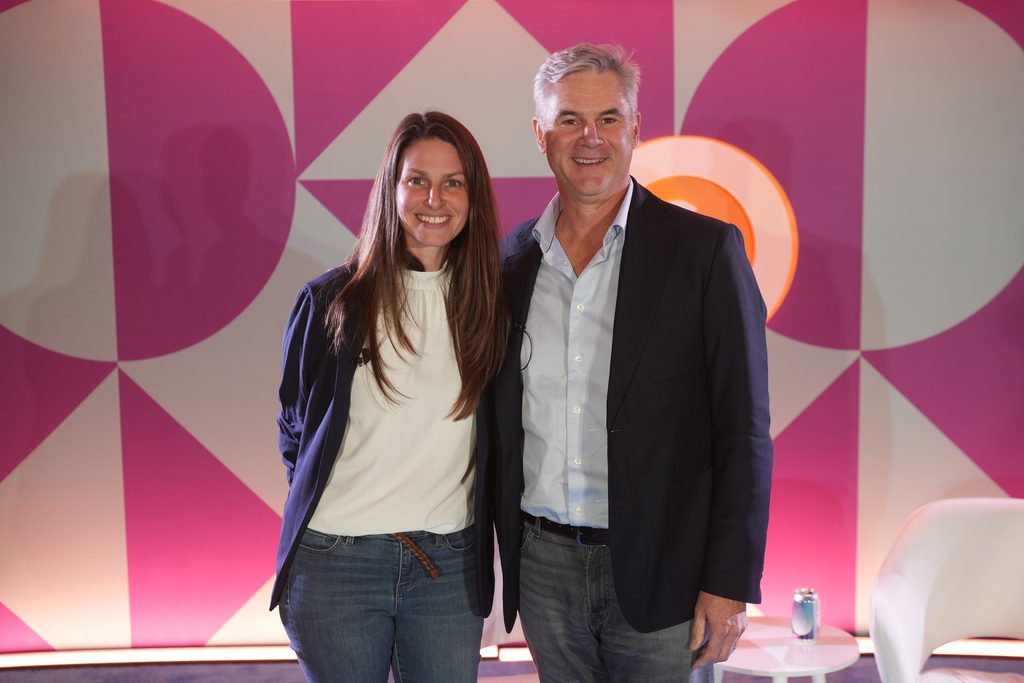
At Advertising Week New York, LoopMe Chief Revenue Officer Michael Scott was joined by Ashley Wheeler, SVP of DV+ Platform Revenue at Magnite, to explore this gap from both sides — the brands trying to buy this reach and the publishers trying to sell it — and what has to change for app inventory to become a core brand channel rather than a test line.

How publishers are navigating the shift 

Ashley described a continuum rather than a single response to the decline in web traffic: at one end, established publishers who already have an app footprint are starting to think about monetization and how to enhance their tech stack; at the other end, premium brands whose audiences once found them through search are now building apps to reduce friction and own the relationship with their users.

Non-traditional app publishers such as commerce platforms are entering the space using Chartboost Direct, LoopMe’s brand SDK for in-app environments.

Why in-app is so effective 

The difference starts with mindset. When someone visits an app, they are actively going to a destination, as opposed to ending up there as part of a search, and this inherently means that users are more engaged. 

Publishers also have more freedom with apps. On the open web, sites are often optimized as much for search engines as for users, but this constraint does not exist for apps, so user experience is the focus. For brands, that means more immersive formats, full-screen high-impact units and strong viewability, in a less cluttered environment.

Targeting is richer too. Publishers get far more device-level data and control over the experience, so brands can layer new signals on top of the audience and contextual approaches they already use. As Ashley put it, targeting can use the same playbook as the open web — or a better, more granular one.

It’s important to remember that ‘in-app’ includes CTV as well as mobile. Michael framed mobile and CTV as one app audience rather than two separate channels, and Ashley agreed: it’s the same person with the same purchasing power, and their attention is divided, so brands need to reach them across both screens, with the right message at the right time.

The gaming opportunity 

Mobile gaming is often written off due to stereotypes about what a ‘gamer’ looks like. To dispel this myth, Michael asked the room who had played a game on their phone in the past week. A lot of hands went up, demonstrating that mobile gaming is for everyone. 

Another reason gaming has a bad reputation, Ashley argued, is that it has historically been judged as a performance channel optimized for clicks. 

Brand demand can help change that. Ashley’s view is that brands moving into apps have the chance to revitalize the ecosystem, because brands do not want a high click-through rate at the expense of upsetting their users. Even gaming publishers that have historically leaned on performance demand are starting to see that a high performance CPM might not be as valuable as a brand CPM, which looks lower but has a better lifetime value. 

Both Ashley and Michael later went on to name gaming as the most underrated app environment for brands. 

So what needs to change? 

In Ashley’s view, brands’ hesitations around in-app advertising can be bucketed into three categories: 

Brand safety: ‘Safe’ means something broader than the usual definition. It includes avoiding apps that serve a new ad every few seconds, or that trap users in hard-to-escape ad experiences. This is where curation plays a role, as it means knowing what the ad experience actually is, not only that the environment is reputable. 

Targetability: Apps offer targeting that goes beyond what many brands expect, from publisher first-party data to audience segments that can be activated across environments. The opportunity is to show buyers what’s available and let them choose what fits their goals. This applies to CTV too. Michael raised the idea that CTV is often bought as a black box, but Ashley pushed back: genre-level content signals, audiences and supply chain transparency all exist today.

Measurement: The industry has to move beyond click-through rate, and beyond treating CPM as the only measure of value. Ashley believes that focus on brand outcomes, especially mid-funnel metrics, would be better for consumers, developers, and brands alike. 

Ashley offered practical advice for marketers ready to act:

  • Review where your app spend currently goes
  • Demand full app transparency
  • Look beyond CTR, CPM, and VCR
  • Work with your partners on curation, targetability, and measurement 

Conclusion

Michael shared three key takeaways on why app inventory should become a core brand channel: 

  1. The open web’s decline is structural: the audience has moved and it isn’t coming back.
  2. That audience has moved into mobile and CTV apps. It’s where the attention is higher, where the experience is way more immersive and where reach is incremental.
  3. Advertisers can now measure and optimize brand impact in-app while the campaign runs.

Load-Bearing or Theater: AI Across the Agency Landscape

Ask any agency leader whether they use AI and the answer will inevitably be yes. Ask what would happen if their AI systems were switched off tomorrow, and that’s where the real conversation begins. 

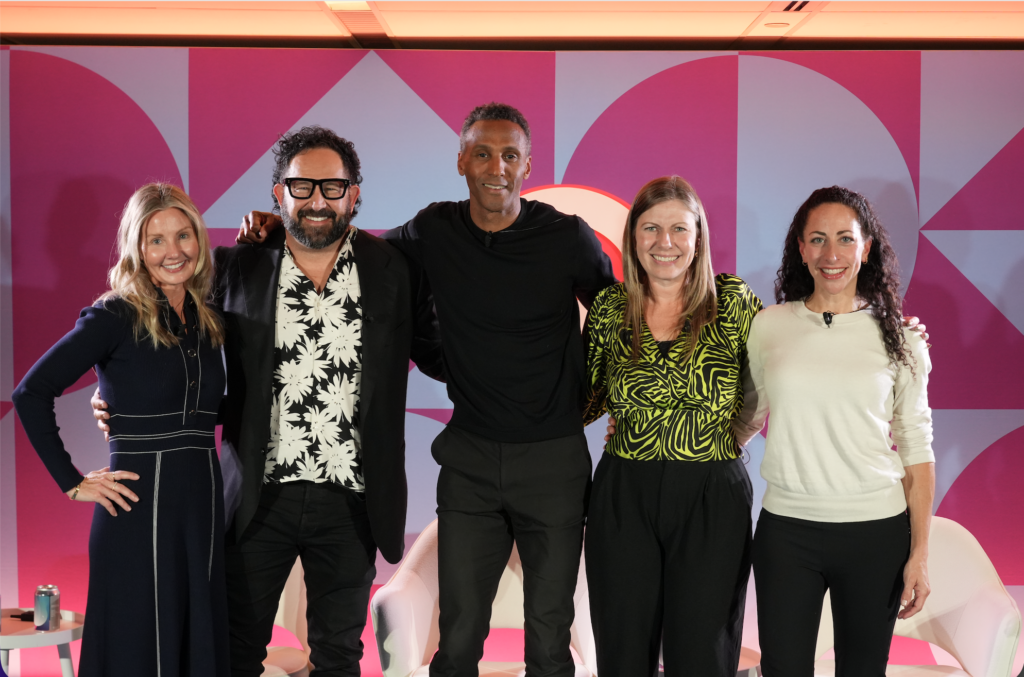
This gap was the starting point for LoopMe’s session at Advertising Week New York, Load-Bearing or Theater: AI Across the Agency Landscape, where industry leaders from Digitas, Havas CX, Mekanism, and PMG joined LoopMe’s Courtney Howell to separate AI that genuinely adds value from AI that is merely performative, and to consider how today’s AI decisions will shape the industry for years to come. 

On stage alongside Courtney Howell, LoopMe’s SVP Global Partnerships, were:

  • Melissa Berger – Chief Solutions Officer, Digitas
  • Arthur Fullerton – Global Chief Technology Officer, Havas CX
  • Jason Harris – Co-Founder & CEO, Mekanism
  • Leah Meranus – Customer President, PMG

How agencies are adopting AI

Agencies are working out in real time what to build, what to buy, and where humans need to stay firmly in the loop. In that rush, activity can look a lot like progress.

Telling the two apart takes perspective. The panel mixed indies and holdcos, with leaders from technology, solutions, client leadership, and creative.  

Culture came up first. PMG Customer President Leah Meranus said “AI will never be part of the system if it’s not part of the culture.” Incentives, training, and processes are what put tools in everyone’s hands. PMG has put this into practice with Alli, the in-house platform it has been building for more than a decade. As an independent, founder-led agency, PMG can make decisions quickly and roll products out across the whole organization, Leah explained. Speed matters at Mekanism too. Co-Founder & CEO Jason Harris said the focus there is speed to market, from agentic workflows to an AI studio that works as a content engine for brands.

The holdco view looks different because the challenge is scale across large networks. Digitas has its own AI platform, which Chief Solutions Officer Melissa Berger described as a training ground that gives people room to play, make, and create. It has produced plenty of agents, though not all of them are useful yet, so the focus now is on refining what actually adds value day to day. 

Deciding which tools are worth keeping shapes how Havas CX approaches the technology. Global Chief Technology Officer Arthur Fullerton noted that a new AI breakthrough arrives roughly every 12 weeks, so it is important to stay model-agnostic and build orchestration layers that work with the best available models. Rather than betting on a single tool, the aim is to make it easy for people to use whichever one fits.

Whether an agency has spent years building its own system or is coordinating AI across a global network, the question is now the same: is it working? Arthur described this as  a maturing approach with three phases: free experimentation, then efficiency gains with no clear measurement, and now a focus on proof, summing it up as “it’s moved to the art of the provable.” Clients have become more sophisticated, and they want to see how AI affects the bottom line and their own business results.

The switch-off test 

So what would happen if AI suddenly disappeared? The panel’s answers were candid: operations would carry on, just more slowly, and they could go back to the old way of working, albeit begrudgingly.  

That is the line between load-bearing and theater. For the panel, AI is useful and growing in importance, but it isn’t yet something the whole operation rests on. Getting there takes measurement, and a clear sense of where AI adds value that would be difficult to replicate. 

Part of the reason is that much of the AI conversation so far has been about cost and efficiency. Melissa said that “doing more with less” is a hot topic, and that clients want to know what discount AI will bring. Speed and efficiency are real gains, and the ones panelists said they would miss most. But they are also the easiest to show and the easiest to match, and on their own they do not prove that AI is essential. To know whether it is load-bearing, you have to be able to measure it against the outcomes that matter. That is the shift from possible to provable.

Where humans sit 

Melissa offered a practical way to think about this, starting with the question “what are the places that a human absolutely has to be involved?”

From a creative perspective, Jason was clear about where AI stops: “it’s a good companion for finding trends and working out where to go strategically… but I wouldn’t let it near any creative thinking.”

Brand is back

The panel made the case that brand will matter more as consumers increasingly look to AI for recommendations. Jason said that when machines are comparing specs and price, they cannot capture why someone loves a brand, which makes brand the point of difference when everything else is roughly equal. Leah added that, without brand, products and services would be commoditized.

The decisions agencies and advertisers make about AI today will shape the industry for years, and the ones that last will protect long-term brand building, not just short-term efficiency.

It’s the same balance that marketers have always had to strike between brand and performance. Efficiency gains that cannot be tied to an outcome are the performance-only version of AI: quick to show and quick to copy. 

Leah put the underlying challenge simply: agencies have data and they have LLMs, and the value comes from how the two are used together to create better intelligence. Arthur described what becomes possible when LLM insight is layered with behavioral, analytics, and CDP profile data: recommendations that feel relevant. When everyone has access to the same models, the difference comes from the data an advertiser brings to them.

Measurement matters just as much. Melissa pointed to customer lifetime value as a more insightful metric than impressions or email opens, because the real question is whether you are moving more customers up the value chain, not just reaching them once.

None of this means that brand has to be reduced to a number. Its effects play out over years, not weeks, so what matters is connecting AI to the outcomes that count, including the long-term ones. That is why the return of brand matters. At LoopMe “we’re starting to see the reemergence of brand awareness becoming more of a focus,” Courtney said, and the long game is back with it.


Key takeaways: 

  • Don’t stop at efficiency when measuring AI. Load-bearing AI is tied to the business outcomes clients actually care about.
  • Keep investing in brand. When AI is comparing options with similar prices and features, a strong brand is the differentiator that will keep you in the consideration set.
  • Build on your own data. Everyone has access to the same LLMs, so what you layer on top of them is what sets you apart.

LoopMe renews both EDAA Trust Seal and ePrivacyseal, demonstrating commitment to data protection and privacy practices

LoopMe has renewed both its European Interactive Digital Advertising Alliance (EDAA) Trust Seal and its ePrivacyseal, following independent audits of its data protection and privacy practices.

Both seals were initially awarded in 2022, and their renewal reflects LoopMe’s ongoing compliance with rigorous standards as well as its commitment to consumer privacy and the safeguarding of user data.

The EDAA is a non-profit organisation that administers the European self-regulatory programme for online behavioural advertising (OBA). Holding its Trust Seal means that LoopMe has been certified as meeting the programme’s requirements for transparency, choice and control, and is subject to ongoing monitoring.

The ePrivacyseal is awarded by ePrivacy, an independent certification provider specialising in European data protection and privacy. The seal shows that LoopMe’s data processing and products have been assessed by legal and technical experts against high standards. It also recognises LoopMe’s adherence to the General Data Protection Regulation (GDPR) and relevant national European legislation.

Paolo Cerroni, General Counsel at LoopMe, comments: “The renewal of both seals confirms LoopMe’s long-standing commitment to responsible data handling. Independent third-party certification gives our partners objective assurance that our privacy practices meet recognised industry standards. Both certifications reflect the high bar we set for our policies, processes and practices on data protection and compliance, supported by the governance, controls and training we maintain day to day. As LoopMe scales and develops new adtech solutions, data privacy remains central to how we design and operate our products. We believe trust and transparency are the cornerstones of digital advertising.”

Employee Spotlight: Alona Patsiuk-Allen

Meet Alona Patsiuk-Allen, Product Manager at LoopMe — Alona talks about why adtech suits her, why she enjoyed working on LoopMe’s measurement integration with The Trade Desk, and her interest in gardening.


Why did you decide to work in this industry?
I never planned to work in tech. I did not really know it existed when I was choosing a career. I was going to build something in restaurants and hospitality. Then I moved to Poland, that path turned out to be complicated, and Google’s outsourcing partner in Kraków was hiring Ukrainian and Russian speakers to work on AdWords. AdTech turned out to fit the way my brain works, somewhere between people and systems. 

What motivates you to come to work?
People, mostly. I know the usual line is that working with people is the hard part, but I am an extrovert for roughly nine tenths of my day, and a team is genuinely the thing that gets me through. The rest is that I like doing a good job. When I know what needs to happen and how, I am very motivated. When I am standing at a crossroads with no clear answer, less so, so I solve it, and the motivation comes back with interest.

What project or event has been your favourite at LoopMe?
The Trade Desk integration for our measurement services. It had everything I enjoy in one project. A genuinely strong team drawn from several different functions, a technical area that was new to me since it was built on API work, and enough real decisions to mean that I could not coast. It was also properly cross-functional, which meant negotiation, alignment and problem solving alongside the technical work. Those are the muscles I have spent my career building, and it was very satisfying to use all of them at once.

Tell us a bit about yourself.
I am originally Ukrainian, from Donbas, and I came to Poland in 2012, back when there were very few of us here. That scarcity is actually how I got into Google, since they were collecting Ukrainian and Russian speakers from across the country and bringing them to Kraków. Fourteen years of Polish life have shaped how I read situations, and since my husband is English, there is a third culture in the house. The question “Where are you from?” whilst traveling usually gets me thinking. I feel more like a European with a Polish postcode.

Do you have any hobbies?
The official answer has always been sport, yoga, meditation and books, and all of that is true. The recent realisation and proper answer is gardening, which has been with me since I was about five, following my mum and both grandmothers around their very overpopulated windowsills. Every time I move to a bigger balcony, the plant count rises to match. Everyone around me knows that a gift card for a garden centre will be used within the week. It takes a lot of time and sometimes I question if it’s worth it, but seeing the beautiful results of your work is amazing. 

If you could live anywhere in the world, where would you choose and why?
I can partly say I already do. I arrived in Poland in 2012 only to have a look at Europe, fell for Wrocław, and stayed. But things are changing with time. I visited Singapore last year and it got me completely. Greenery everywhere, hot weather, which I love, and clean, safe streets. For someone with my plant habit it felt like paradise. So Singapore is the one I think about now.


LoopMe is hiring! Take a look at our open roles.

LoopMe’s 9th patent recognizes real-time AI control groups for brand lift measurement

The latest patent in LoopMe’s ever-expanding IP portfolio covers RISA (Residual Index Selection Algorithm), the AI behind the real-time control groups used in LoopMe’s brand lift measurement. 

Released in 2022, RISA builds statistically robust control groups from non-incentivized mobile users, matching each exposed profile with an unexposed one that shares 50+ characteristics. The two groups are built in parallel: RISA adds matched profiles in real time with each new exposure, so the composition of the two groups remains comparable, rather than drifting apart, as pre-determined control groups might do. The result is a level of accuracy that allows LoopMe to measure the effectiveness of media campaigns reliably, a standard that panel-based methodologies would struggle to match. 

With this addition, filed under the name ‘Apparatus and Method for Forming a Control Group’, LoopMe’s patent count now stands at nine allowed, with a further eight pending. 

As LoopMe’s portfolio continues to grow, with patents also recently secured for the Intelligent Marketplace throttler as well as the technology connecting supply and demand in programmatic auctions, it’s clear that LoopMe’s approach to adtech is genuinely innovative. 

The patent is the first for LoopMe AVP Data Science Yuliia Loktionova, who comments: “Most incrementality measurement establishes a control group at launch and assumes it still matches the exposed group at close. RISA removes that blind spot, so the outcomes we report are built on statistical rigor from start to finish. Building an algorithm that self-corrects for statistical drift in real time is one of the more interesting problems I’ve tackled, and it’s incredibly rewarding to see this work formally acknowledged.”

LoopMe’s Chief Data Scientist Dr. Leonard Newnham concludes: “Every patent we secure is a testament to LoopMe’s long-term investment in AI and proof that our solutions are truly unique. This one means even more because of who’s behind it: Yuliia has built an impressive track record, with five patent applications and counting.”

LoopMe launches Brand Lift integration with The Trade Desk

Global campaigns need global measurement. But today, brand lift measurement doesn’t always scale with the advertisers who rely on it.

In many markets, brand lift measurement is underserved or simply unavailable. Where it does exist, minimum campaign requirements of 3–4 million impressions can put it out of reach for smaller campaigns and markets. And for advertisers measuring across multiple regions, working with different vendors and methodologies can make it difficult to build a consistent view of performance.

The result? Global advertisers can measure some of their activity, some of the time — but getting a comparable view of brand impact across markets remains a challenge.

Making Global Brand Lift Easier to Scale

As advertisers run campaigns across more markets, measurement needs to keep pace. Brand lift shouldn’t be limited to the largest campaigns or require advertisers to piece together results from different providers and methodologies.

That’s why we’re excited to announce that LoopMe Brand Lift is now available through a direct API integration with The Trade Desk Measurement Marketplace.

The integration brings LoopMe’s patented Brand Lift measurement directly into The Trade Desk, giving advertisers a consistent and scalable way to measure brand impact across 35+ markets and 17 languages — all within their existing campaign workflow.

With feasibility starting at just 1 million impressions per study, advertisers can extend measurement to more campaigns and markets while using one consistent methodology to understand performance across their global activity.

One Integration, More Measurable Campaigns

LoopMe Brand Lift within The Trade Desk is designed to remove some of the barriers that have traditionally made global brand measurement difficult to scale:

  • Measure consistently across markets: Run standardized brand lift measurement across 35+ markets and 17 languages, creating a more comparable view of global campaign performance.
  • Measure more campaigns: Studies can be feasible from just 1 million impressions, compared with provider minimums of 3–4 million impressions in many markets, making smaller campaigns and markets more easily measurable.
  • See results while campaigns are still running: Lift data is updated every 24 hours directly within The Trade Desk dashboard, beginning as early as 10 days after launch, with reporting across age, gender, device, creative, ad group and campaign ID.
  • Keep measurement within your existing workflow: Book studies during standard campaign setup in The Trade Desk, with no separate contracting or additional platform required.

“In many markets, brand lift measurement is simply not an option for advertisers,” commented Matthew Deets, VP Demand Partnerships at LoopMe. “If it is available, it rarely allows the scope of measurement needed to truly understand results across regions. Our partnership with The Trade Desk helps address these challenges, providing the rigorous standards needed to trust uplift data, while remaining lightweight and scalable enough to be actionable across multiple regions at once. We’re proud to deliver these capabilities in partnership with The Trade Desk team.”

Built for Scale Without Sacrificing Rigor

Making brand lift easier to run shouldn’t mean compromising on measurement quality.

LoopMe Brand Lift measures real consumers rather than recruited panels, surveying users within voluntary mobile ad breaks. Control groups are matched using LoopMe’s patented RISA algorithm across 100+ variables, helping advertisers understand the incremental impact of their campaigns with statistically rigorous measurement.

Through the direct API integration, advertisers can set up and launch their study without leaving The Trade Desk. Study parameters are passed directly to LoopMe, where measurement is deployed and results are fed back into The Trade Desk dashboard — eliminating separate logins, accounts and reporting workflows.

Donny Spano, Director, Data Partnerships at The Trade Desk, added: “We remain committed to advancing the industry by providing advertisers with sophisticated tools and capabilities, particularly within our global infrastructure. We are pleased to extend LoopMe’s international reach and scalability to a broader range of clients and global campaigns.”

Flexible Measurement for Different Campaign Needs

The integration gives advertisers a scalable, self-service option for standard brand lift measurement directly within The Trade Desk. For campaigns requiring greater customization, advertisers can also work with LoopMe through its fully customizable Managed Service.

Whether measuring a single campaign or looking to build a more consistent view of brand impact across markets, advertisers now have more flexibility to bring brand lift measurement to more of their media activity.

LoopMe Brand Lift is now available in The Trade Desk Measurement Marketplace. To add brand lift to your next campaign, select LoopMe under measurement options within The Trade Desk, or reach out to your LoopMe or The Trade Desk representative to learn more.

ChinaJoy Presentation Recap | Smarter AI: An engine for full-cycle mobile growth 

At this year’s ChinaJoy, LoopMe’s Rocky Zheng and Claire Wu took to the stage to deliver a keynote presentation about how AI can be harnessed to build a full-cycle engine for mobile growth. Exploring the four key pillars of agentic AI, business outcomes, premium supply, and mobile in-app, the session unpacked how LoopMe’s proprietary technology stack, including the newly-released Chartboost Direct, helps advertisers and publishers build an efficient, effective platform for growth. 

The session summary is as follows.

1. Agentic AI is driving programmatic advertising from ‘buying tool’ to ‘outcomes engine’

2026 marks the era of agentic AI and, in advertising, it is fundamentally reshaping how campaigns are run. In the traditional DSP model, humans specify campaign goals, configure audience segments, and set bidding rules, while the DSP simply executes the media buy. Under the agentic AI model, humans define the ultimate business objective, while AI autonomously interprets that goal, breaks down the workflow, tracks delivery in real time, and continuously optimizes and corrects execution in a matter of milliseconds.  

What does this mean for DSPs and ad exchanges?

With agentic AI pushing programmatic to move beyond buying infrastructure into the role of an outcomes engine, the industry is heading down two main routes:

Route one: evolving the DSP into a business operating system. DSPs are shifting  from simple buying and transaction tools into operating systems deeply integrated with data, measurement, and identity infrastructure.

Route two: focusing on building direct, premium traffic channels. More platforms are becoming dedicated traffic channels — whether mobile app, CTV, or high-value audience environments — all working toward the same end goal: helping brand and performance advertisers achieve real business results.

2. Business outcomes: moving beyond metric inflation to real commercial growth

Programmatic advertising has traditionally optimized and learned around metrics like impressions, click-throughs, completion rate, and reach. These matter, but ultimately they are proxies, not the prize. What businesses actually need is real revenue growth.

If brands and agencies continue focusing their budgets on these crowded traditional channels, they will face two key challenges by 2027:

  • Failure to capture attention: traditional channels are oversaturated with information, so user attention is diluted.
  • Rising acquisition costs: with too much budget chasing limited channel inventory, bidding intensifies and costs climb steeply.

3. Premium supply and mobile in-app: the data foundation and traffic environment for the AI era

Agentic AI models depend on high-quality data input to learn and continuously improve. Premium, high-quality traffic environments are the foundation for deep learning and accurate prediction.

Mobile in-app environments offer deeper engagement, more immersive experiences, and more accurate attribution, translating into clearer measurement and more efficient reach for advertisers

Digital ad budgets are visibly shifting from the open web to mobile in-app, with Medialink finding that 45% of marketers planning to shift budget to mobile app environments and Statista reporting that by 2030 83% of ad spend will come from mobile. 

4. Building a highly efficient advertising engine

Since its inception in 2012, LoopMe has been committed to building a fully proprietary technology stack. For agency partners, LoopMe’s patented products deliver a full-funnel solution spanning brand awareness through to performance conversion. LoopMe’s first-party DMP, combined with third-party data partnerships, covers more than 3 billion unique devices globally and captures hundreds of millions of consumer insights each year,  precisely identifying near-term regional demand for specific product categories and building high-performing optimization models as a result.

At the heart of LoopMe’s technology is a multi-agent collaboration framework, including: a campaign optimization agent, an AI model ecosystem agent, a bidding agent, and a supply-side agent. Through this dynamic, multi-agent optimization mechanism, LoopMe helps advertisers achieve results 2–5x higher than industry benchmarks.

5. Chartboost Direct: bringing brands into mobile apps to accelerate publisher growth

Chartboost Direct helps mobile app publishers access premium, direct brand budgets through LoopMe’s AI optimization for brand performance, streamlining the monetization process and opening new revenue opportunities.

  • Direct Pay works through the existing Chartboost SDK integration, requiring no additional development work. Publishers can contract and settle directly with partner DSPs/SSPs, significantly improving payment transparency and efficiency.
  • Direct Deals let publishers bypass conventional aggregated bidding, calling PMP Deal IDs directly through their own ad server — establishing a dedicated ‘fast track’ for top brand DSPs to prioritize access to premium brand budgets.
  • Marketplace Deals require no additional configuration: within the existing aggregated bidding environment, Deal IDs can dynamically package inventory and surface key transaction signals, enabling seamless access to direct brand budgets.

LoopMe fully supports flexible integration methods, covering banner, display, native, CTV, and audio formats across every use case.

6. Traffic quality and anti-fraud safeguards

A strong commercial proposition depends on rigorous safety measures, so LoopMe is deeply integrated with leading global ad quality and anti-fraud providers. Every ad request passes through real-time traffic quality filtering and anti-fraud screening from these third-party providers — ensuring advertisers receive genuine traffic and conversions, while giving publishers confidence that they’re serving safe, high-quality advertising. Together, this builds a sustainable, full-cycle mobile growth ecosystem.

Employee Spotlight: Tetiana Tymoshenko

Meet Tetiana Tymoshenko, Assistant Accountant at LoopMe — as part of our Ukraine Support Month, Tetiana talks about how she has changed since the full-scale invasion began, the simple things she no longer takes for granted, and what she’s holding on to for the day the war ends.


What is your role at LoopMe?
I work as an Assistant Accountant.

How has your experience at LoopMe been overall, and especially under the current circumstances?
My experience at LoopMe has been very positive. Even with the difficult situation of the last few years, the company and my colleagues gave me a lot of support — flexible working hours, understanding when there were problems with internet or electricity, and just being kind and human. This means a lot to me.

How has the war affected your work life/role/time in the office?
The war has changed a lot in our work and our lives in general — power cuts, long air-raid alarms. But because of flexible working and support from my team, I was able to keep doing my job.

It has been over 1,600 days since the full-scale invasion began – how has this period changed you?
This time has taught me to value every day and remember important moments. I have become more able to handle stress, and I find strength in myself that I didn’t know I had before. I am thankful now for simple things — light, warmth, and having my family close.

How has the war impacted aspects of daily life that people may take for granted?
Simple things — like calling your family, hearing their voice, knowing they are safe, or meeting with friends — are now the most valuable things in life.

Where do you find strength and inspiration in today’s Ukraine?
I find strength in people, in the resilience and strength of Ukrainians, in how we help each other. Despite all the difficulties, we keep making plans for the future.

What’s the first thing you will do once the war is over?
The first day will be a day of silence. Every morning, we have a minute of silence to remember the people who are no longer with us. I think for all Ukrainians, that day will be a time to reflect, to be grateful to our defenders, and to remember those who made it possible for us to see this day.

What would you like your colleagues to understand?
Every Ukrainian is fighting an invisible battle right now — a battle with tiredness, anxiety, and uncertainty. But at the same time, we believe and hope for a better future. Your support and understanding mean more to us than you may realize!

Employee spotlight: Charley Liu

Meet Charley Liu, Staff Solutions Engineer at LoopMe — Charley talks about why he was drawn to the ad industry, how AI has transformed his way of working, and why he would love to live in Tokyo.


Why did you decide to work in this industry?
I’ve always been drawn to how technology can make communication feel personal rather than generic — and mobile ads are one of the last places most people expect that. With the right tech and talent, ads can be genuinely interactive and engaging rather than something to tune out. That’s the industry I wanted to help build: ads people don’t mind seeing because they’re relevant and useful.

What motivates you to come to work?
Meeting my colleagues (learning about San Francisco from the locals), working alongside talented people, solving problems, and helping customers hit their goals — always chasing that happy-face emoji in return.

Can you discuss a skill you’ve acquired or developed while working at LoopMe?
Right around the time Chartboost merged with LoopMe, we started embracing an AI-first way of working. It transformed how I work as a solutions engineer — instead of spending most of my time writing one-off scripts for specific tasks, I now work alongside AI agents and spend more time thinking about efficiency and creativity. That’s opened the door to tackling more projects and ideas that used to be constrained by limited resources.

Tell us a bit about yourself.
I’m originally from a small water town near Shanghai (though my colleagues would correct me — 3 million people isn’t exactly ‘small’!), but I’ve spent most of my adult life in the Bay Area, close to both tech and nature. I love a category of sports I think of as pivot/rotation around something: badminton, snowboarding, motorcycle. What draws me in is that feeling of a controlled acceleration arc — it excites me and calms me down at the same time, a perfect balance.

Do you have any hobbies?
I’ve been practicing drums for the past two years, and I can finally cover/record the song that motivated me to start this journey. I’m not a fast learner, but my love for drums hasn’t faded one bit. I’ll keep practicing and improving — maybe play on stage someday — but either way, I know it’ll be a lifelong hobby.

If you could live anywhere in the world, where would you choose and why?
I’ve visited Tokyo a few times and love it — the clean streets, the spider-web-like subway system that seems overwhelming at first but runs with incredible precision, down to the second. Every street has its own vibe, and you could spend a lifetime exploring and never run out. It feels like the perfect blend of everything I love in a modern city. That said, London has been climbing my list lately, thanks to its culture, people, and history.


Interested in joining the LoopMe team? Visit our careers page.