Load-Bearing or Theater: AI Across the Agency Landscape
Ask any agency leader whether they use AI and the answer will inevitably be yes. Ask what would happen if their AI systems were switched off tomorrow, and that’s where the real conversation begins.
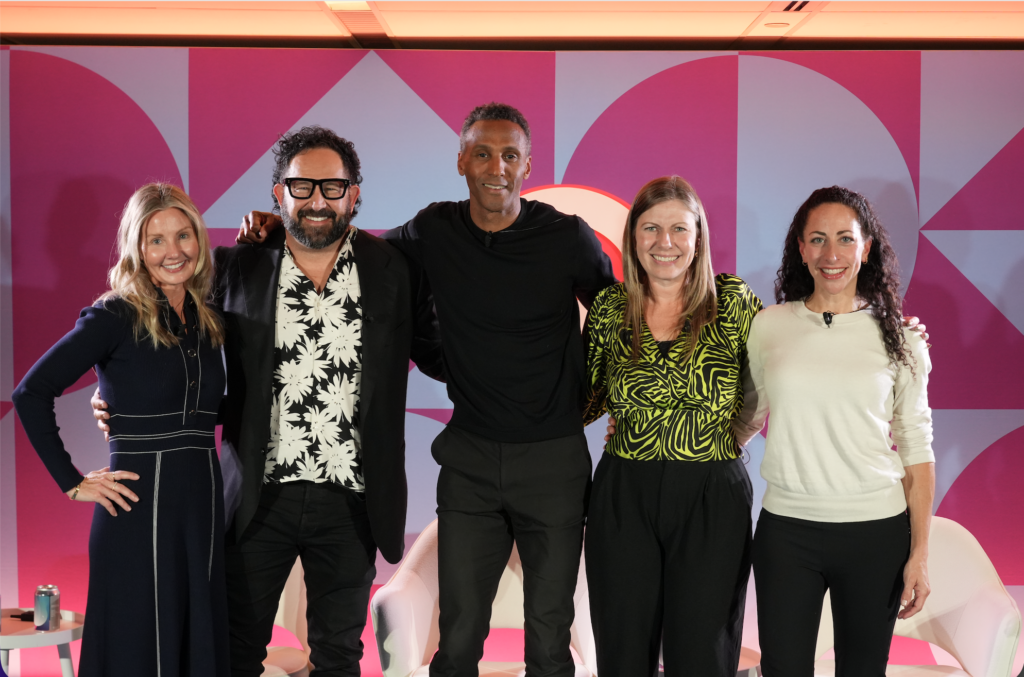
This gap was the starting point for LoopMe’s session at Advertising Week New York, Load-Bearing or Theater: AI Across the Agency Landscape, where industry leaders from Digitas, Havas CX, Mekanism, and PMG joined LoopMe’s Courtney Howell to separate AI that genuinely adds value from AI that is merely performative, and to consider how today’s AI decisions will shape the industry for years to come.
On stage alongside Courtney Howell, LoopMe’s SVP Global Partnerships, were:
- Melissa Berger – Chief Solutions Officer, Digitas
- Arthur Fullerton – Global Chief Technology Officer, Havas CX
- Jason Harris – Co-Founder & CEO, Mekanism
- Leah Meranus – Customer President, PMG
How agencies are adopting AI
Agencies are working out in real time what to build, what to buy, and where humans need to stay firmly in the loop. In that rush, activity can look a lot like progress.
Telling the two apart takes perspective. The panel mixed indies and holdcos, with leaders from technology, solutions, client leadership, and creative.
Culture came up first. PMG Customer President Leah Meranus said “AI will never be part of the system if it’s not part of the culture.” Incentives, training, and processes are what put tools in everyone’s hands. PMG has put this into practice with Alli, the in-house platform it has been building for more than a decade. As an independent, founder-led agency, PMG can make decisions quickly and roll products out across the whole organization, Leah explained. Speed matters at Mekanism too. Co-Founder & CEO Jason Harris said the focus there is speed to market, from agentic workflows to an AI studio that works as a content engine for brands.
The holdco view looks different because the challenge is scale across large networks. Digitas has its own AI platform, which Chief Solutions Officer Melissa Berger described as a training ground that gives people room to play, make, and create. It has produced plenty of agents, though not all of them are useful yet, so the focus now is on refining what actually adds value day to day.
Deciding which tools are worth keeping shapes how Havas CX approaches the technology. Global Chief Technology Officer Arthur Fullerton noted that a new AI breakthrough arrives roughly every 12 weeks, so it is important to stay model-agnostic and build orchestration layers that work with the best available models. Rather than betting on a single tool, the aim is to make it easy for people to use whichever one fits.
Whether an agency has spent years building its own system or is coordinating AI across a global network, the question is now the same: is it working? Arthur described this as a maturing approach with three phases: free experimentation, then efficiency gains with no clear measurement, and now a focus on proof, summing it up as “it’s moved to the art of the provable.” Clients have become more sophisticated, and they want to see how AI affects the bottom line and their own business results.
The switch-off test
So what would happen if AI suddenly disappeared? The panel’s answers were candid: operations would carry on, just more slowly, and they could go back to the old way of working, albeit begrudgingly.
That is the line between load-bearing and theater. For the panel, AI is useful and growing in importance, but it isn’t yet something the whole operation rests on. Getting there takes measurement, and a clear sense of where AI adds value that would be difficult to replicate.
Part of the reason is that much of the AI conversation so far has been about cost and efficiency. Melissa said that “doing more with less” is a hot topic, and that clients want to know what discount AI will bring. Speed and efficiency are real gains, and the ones panelists said they would miss most. But they are also the easiest to show and the easiest to match, and on their own they do not prove that AI is essential. To know whether it is load-bearing, you have to be able to measure it against the outcomes that matter. That is the shift from possible to provable.
Where humans sit
Melissa offered a practical way to think about this, starting with the question “what are the places that a human absolutely has to be involved?”
From a creative perspective, Jason was clear about where AI stops: “it’s a good companion for finding trends and working out where to go strategically… but I wouldn’t let it near any creative thinking.”
Brand is back
The panel made the case that brand will matter more as consumers increasingly look to AI for recommendations. Jason said that when machines are comparing specs and price, they cannot capture why someone loves a brand, which makes brand the point of difference when everything else is roughly equal. Leah added that, without brand, products and services would be commoditized.
The decisions agencies and advertisers make about AI today will shape the industry for years, and the ones that last will protect long-term brand building, not just short-term efficiency.
It’s the same balance that marketers have always had to strike between brand and performance. Efficiency gains that cannot be tied to an outcome are the performance-only version of AI: quick to show and quick to copy.
Leah put the underlying challenge simply: agencies have data and they have LLMs, and the value comes from how the two are used together to create better intelligence. Arthur described what becomes possible when LLM insight is layered with behavioral, analytics, and CDP profile data: recommendations that feel relevant. When everyone has access to the same models, the difference comes from the data an advertiser brings to them.
Measurement matters just as much. Melissa pointed to customer lifetime value as a more insightful metric than impressions or email opens, because the real question is whether you are moving more customers up the value chain, not just reaching them once.
None of this means that brand has to be reduced to a number. Its effects play out over years, not weeks, so what matters is connecting AI to the outcomes that count, including the long-term ones. That is why the return of brand matters. At LoopMe “we’re starting to see the reemergence of brand awareness becoming more of a focus,” Courtney said, and the long game is back with it.
Key takeaways:
- Don’t stop at efficiency when measuring AI. Load-bearing AI is tied to the business outcomes clients actually care about.
- Keep investing in brand. When AI is comparing options with similar prices and features, a strong brand is the differentiator that will keep you in the consideration set.
- Build on your own data. Everyone has access to the same LLMs, so what you layer on top of them is what sets you apart.